
Key Takeaways
Transitioning from old to new doesn’t always require a total kitchen replacement. Here is how professional cabinet spray finishing Grand Rapids experts deliver long-lasting results.
- The spray process yields a smoother, factory-like finish compared to traditional rollers.
- Professional preparation prevents peeling and ensures long-term cabinet coating adhesion.
- Local specialists in West Michigan provide the necessary dust-controlled environments for curing.
- Using high-durability finishes like conversion varnish protects against daily household wear and tear.
- Proper maintenance significantly extends the lifespan of a fresh cabinet coating.
Why spray finishing is superior to manual brushing
When homeowners decide to update their kitchen, the quality of the finish is usually the first thing they notice. Skipping the brush in favor of a specialized spray application makes a substantial difference in how paint levels out over wood grain. This method is generally faster and produces a refined aesthetic that holds up to inspection under bright kitchen lights.
Achieving a factory-smooth finish
Achieving a smooth look depends on how well the paint lays down on the door surface. Spraying atomizes the material into a fine mist that settles evenly, settling into deep pores without leaving the texture of bristles behind. This flawless, ultra-smooth finish elevates the entire room, making standard cabinets look like custom installations.
Eliminating brush marks and streaks
Brushing often leaves behind tell-tale ridges in the paint, especially as it begins to dry and loses its ability to flow together. By using a spray system, you remove the human element of manual stroking, which ensures that no streaks distract from the cabinet color. This precision is essential for lighter colors where marks would otherwise be highly visible.
Reducing time on-site for homeowners
Time management is a huge factor when you are dealing with a kitchen that is out of commission. Because spray finishing allows for efficient application in a controlled setting, the on-site downtime is minimized. This is a common advantage highlighted by companies like CertaPro Painters for residential projects.
Superior coverage for intricate cabinet profiles
Cabinets with detailed trim, inset panels, or complex carvings are difficult to paint with a brush alone. Brushing often leads to drips settling in these tight crevices, whereas sprayers reach into the corners easily.
| Feature | Manual Brushing | Spray Finishing |
|---|---|---|
| Finish Texture | Visible brush marks | Smooth and level |
| Time per door | Slow and meticulous | Quick and uniform |
| Crevice Coverage | Prone to pooling | Even and light |
This table illustrates why professionals often suggest shifting away from labor-intensive manual methods when working with modern, intricate cabinetry designs.
The professional cabinet spray finishing process
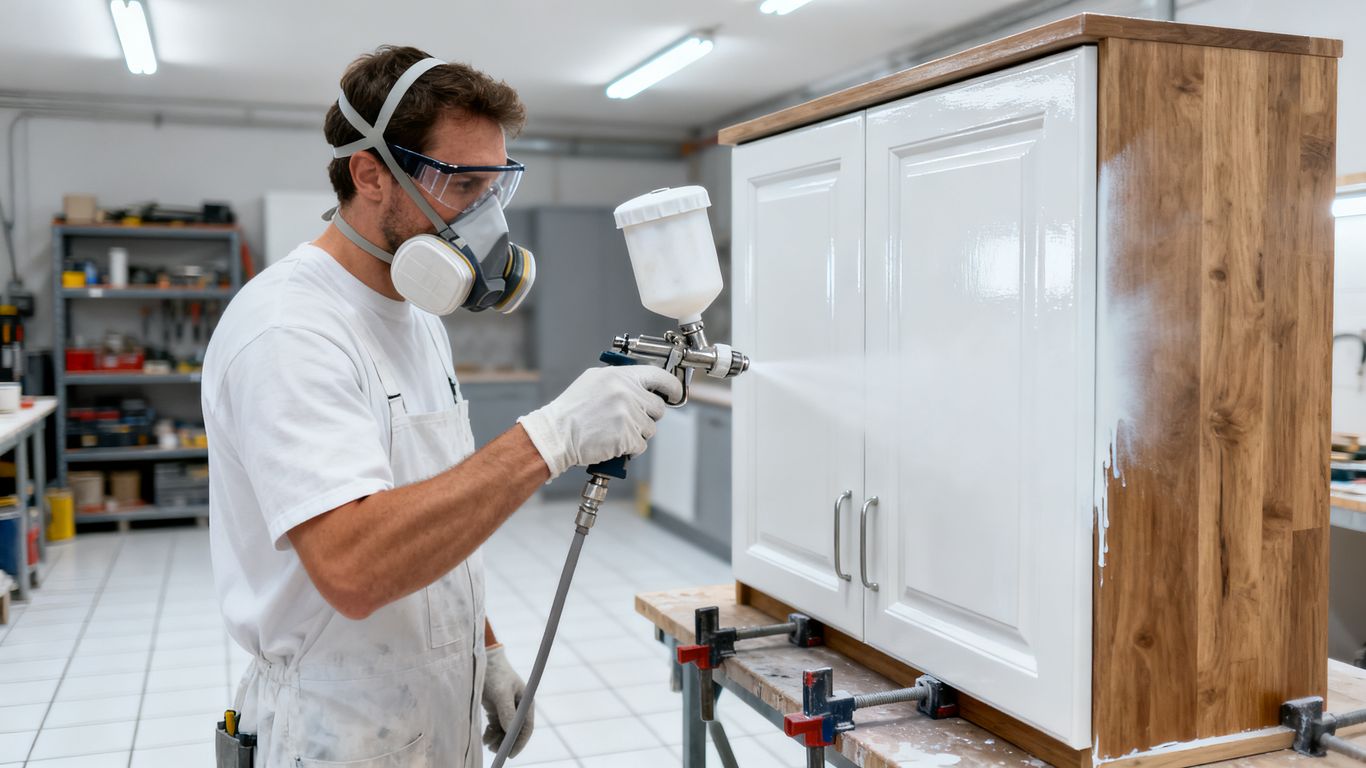
Taking a shortcut in the preparation phase is the fastest way to ruin a finish before it even cures. High-quality results come from a sequence of steps that prioritize raw surface integrity above everything else. For a reliable team like Frontjes Painting, the process is both a science and a craft.
Deep cleaning and degreasing surfaces
Kitchens are naturally greasy environments, and that grease will prevent any new paint from grabbing properly. Surfaces must be scrubbed with industrial-grade degreasers to remove years of cooking oils and dust particles. Without this deep clean, the finish will likely flake off shortly after completion.
Proper sanding and surface preparation
Sanding provides the "tooth" that allows primers to lock into the wood fibers. Technicians sand every surface to remove old sheen and create a raw surface, filling in any Knicks or gaps with durable fillers along the way. Meticulous work here ensures the final coat remains flush with the surrounding wood.
Application of specialized industrial primers
Primers act as the bridge between raw wood and your topcoat. Using industrial-grade products is critical because they provide superior moisture resistance and stain blocking. This layer is crucial for long-term bonding and preventing bleed-through from tannins in the wood.
Applying multiple coats in a controlled environment
Professional shops use booth environments where temperature and airflow are regulated to keep dust out while paint is still wet. By applying multiple thin layers rather than one heavy coat, the finish gains depth and resilience. This approach is what allows Frontjes Painting to achieve such consistent results on complex residential projects.
Choosing the right finishes for your cabinets
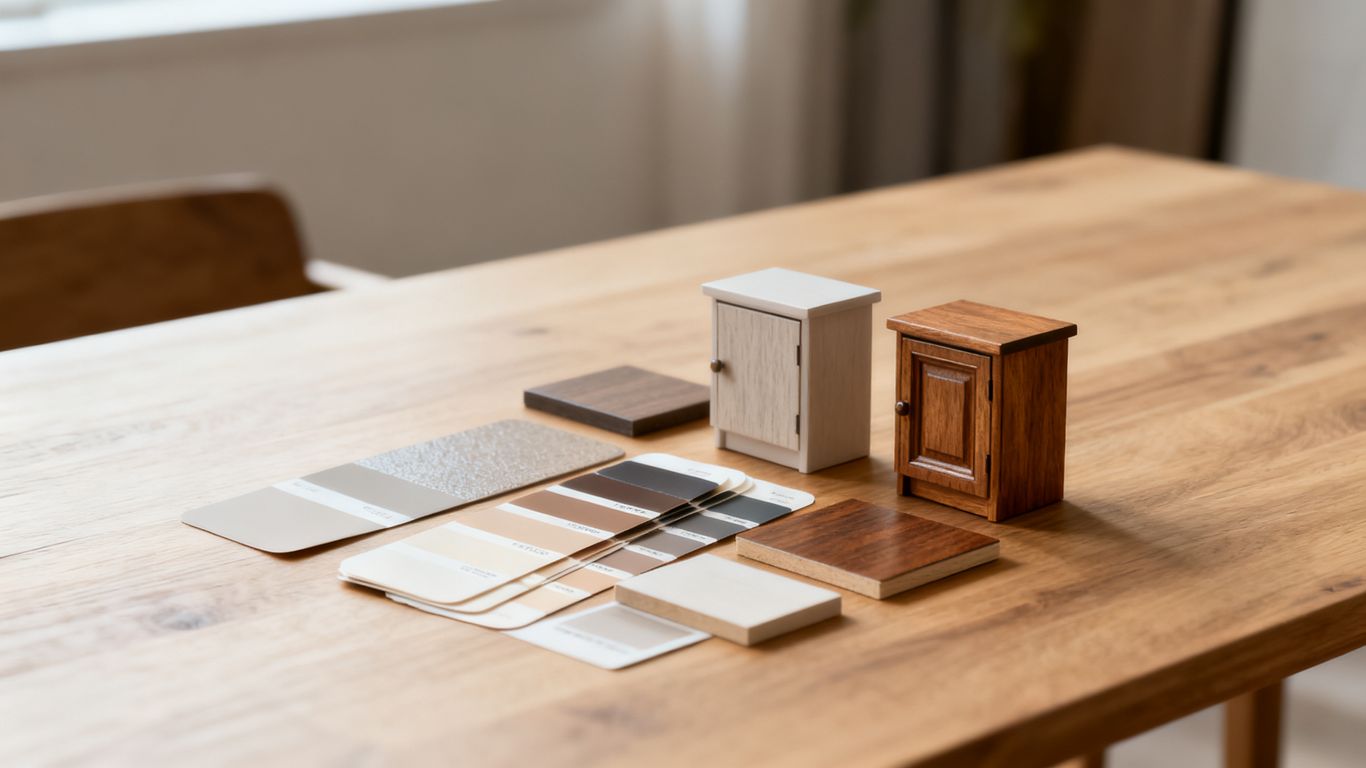
Selecting a finish is as much about chemistry as it is about style. Different sheen levels contribute to the final appearance and how easily the surface can be wiped down after a spill. You want to choose something that survives the daily chaos of a busy home while still feeling luxurious to the touch.
Understanding common sheen levels
Sheen refers to how much light bounces off the paint, ranging from matte to high gloss. Most homeowners prefer a satin or eggshell finish because they hide small surface imperfections while remaining cleanable. It’s a balance of aesthetics and practicality that defines many modern kitchen makeovers.
Benefits of conversion varnish vs. traditional lacquer
Conversion varnishes are often preferred because they cure into an exceptionally hard and flexible bond, which is highly resistant to chemicals and water. This differs from traditional lacquer which might become brittle over time. If you want to use the right tools for your business, you might look into 8459 for more technical comparisons of finishing products.
Selecting durable coatings for high-traffic kitchens
High-traffic kitchens need protection against heat and sharp objects. Professionals prioritize two-component (2K) formulations that cross-link during curing. This is an industry standard for companies like MPD Finishing when handling heavy-duty production work.
Current cabinet color trends in West Michigan
Homeowners are moving away from dark, heavy stains and leaning toward soft, clean colors like charcoal, sage, and cool white. Light, airy tones help open up older kitchen layouts without the need to tear out the existing framework. If you are a digital nomad coordinating these projects, you might manage your workflow using e481 for better efficiency.
Advantages of choosing a local Grand Rapids specialist
Local providers know the specific preferences and environmental conditions of the region better than anyone else. Hiring locally ensures you have someone to hold accountable, and it keeps your money within the community while supporting local craftsmanship.
Access to professional industrial spray booths
Local shops have dedicated facilities to house your doors while they cure, which is impossible to mimic in a home garage. This dedicated space ensures that your cabinets remain dust-free throughout the entire process.
Local reputation and accountability for your project
A local firm relies heavily on word-of-mouth and professional reviews from neighbors. If you ask around, you will find that companies like Frontjes Painting build their business on transparent communication and reliable work that holds up for years.
Custom solutions for unique trim and cabinetry designs
- Personalized consultations to match your home’s unique architectural details.
- Tailored spray settings to protect delicate historical woodwork.
- Ability to bridge the gap between design vision and physical execution.
- Seamless scheduling that adapts to local remodel timelines.
Having a team that can adapt to custom requests without a corporate "cookie-cutter" approach is a significant benefit. This hands-on capability allows you to address specific design challenges on the fly without delaying the entire project.
Seamless integration with local home remodeling schedules
Working with professionals who are familiar with local contractors makes managing a renovation much easier. They understand the typical sequence of trade work, so they don’t impede the progress of countertops, flooring, or new hardware installations.
Maintenance and long-term care guide
Properly applied finishes are incredibly durable, but they aren’t completely indestructible. A little bit of daily awareness keeps your kitchen looking crisp for years, and knowing how to handle surface issues will prevent minor problems from turning into costly repairs.
Recommended cleaning agents for sprayed cabinets
Avoid harsh bleaches or heavy chemical solvents that can strip the protective finish. Use a microfiber cloth and a mild soap for daily cleaning, which is usually sufficient to handle grease without damaging the underlying chemistry of the paint.
Avoiding abrasive tools that damage finishes
Steel wool and heavy abrasive pads should be relegated to the workshop floor, never to your cabinet doors. These items can leave micro-scratches that invite moisture to seep into the finish over time. Always reach for soft cloths instead.
Managing environmental factors in your kitchen
Rapid temperature changes and heavy humidity can sometimes lead to wood expansion. Running your kitchen overhead vent during heavy cooking helps maintain a consistent environment that keeps the cabinet finish stress-free.
When to call a professional for a finish touch-up
If you see a deep scratch or a chip that goes down to the bare wood, don’t try to dab it with craft paint. A professional can use specific touch-up procedures that blend the new finish into the old without creating a patchy effect or mismatched sheen.
Conclusion
Transforming your kitchen is a significant investment in both time and quality, and professional spray finishing remains the most reliable way to achieve a high-end look that stands the test of time. By relying on local expertise like Frontjes Painting and selecting the right durable materials, homeowners can enjoy a refreshed, modern space that truly complements their lifestyle while ensuring that every detail is finished with the precision they deserve.
Frequently Asked Questions
How long does the cabinent spray finishing process take?
A typical kitchen project usually lasts between five and seven days. This window covers the initial removal of doors, the cleaning and prep phase, the dedicated spraying in a shop, and the final reinstallation of all hardware and drawers.
Can I change my cabinet color during the project?
Changing colors once the materials have been ordered or the spraying has begun is often impossible without incurring significant additional costs. It is much wiser to finalize your color choices during the initial consultation before any mixing or application takes place.
Does this process require a full kitchen remodel?
Not at all, as this approach is designed specifically to breathe new life into existing cabinet frames. Many homeowners use this as a standalone update, though it often acts as the highlight of a wider kitchen refresh involving new handles or updated counters.
Will the finish peel over time?
A professionally applied finish should not peel if the wood was properly cleaned, sanded, and primed using correctly cross-linked coatings. Peeling is usually a symptom of skipping the prep work or using the wrong type of paint for the specific cabinet material.
Can any type of cabinet be spray finished?
Most solid wood, plywood, and MDF cabinets can be successfully refinished with the right approach. Professionals will inspect the integrity of the base material during the initial walk-through to ensure the structure is sound enough to hold a new finish.
Are there strong odors during the application?
While there is an initial scent during the painting process, professional spray booths are equipped with industrial-grade ventilation. Most odors dissipate quickly once the furniture is back in your home, especially compared to the heavy fumes associated with older, poorly ventilated painting methods.
How durable is a spray-on cabinet finish compared to factory-new?
Modern professional coatings are engineered to be extremely durable, often matching or exceeding the performance of factory-baked finishes. They are designed to withstand the consistent heat, humidity, and physical use that occurs in a functioning kitchen environment.