
Key Takeaways
Cabinet painting can refresh a Grand Rapids kitchen without the disruption of a full replacement. The final price depends less on paint alone than on cabinet condition, preparation, layout, and finish method.
- A small kitchen may cost substantially less than a large, detailed kitchen with many doors and drawers.
- Cleaning, sanding, repairs, primer, and proper curing have a major effect on the result.
- Repainting is usually worth considering when the cabinet boxes and layout are still sound.
- Spray-shop work can improve consistency for removable doors, frames, and other pieces.
- A written estimate should clearly explain preparation, materials, labor, timing, and cleanup.
What cabinet painting typically costs in Grand Rapids
Homeowners researching cabinet painting cost Grand Rapids should think in ranges rather than one fixed number. A straightforward project with sound cabinets and a simple layout will price differently from a kitchen with heavy grease buildup, damaged edges, or unusually large doors. Local labor, access, finish expectations, and the number of components all shape the estimate. Online pricing guides can provide a starting point, but an in-person review is more useful for an actual budget.
Price ranges for small, average, and large kitchens
As a broad planning guide, a small kitchen with limited cabinetry may fall around $2,000 to $4,000, while an average kitchen may land near $4,000 to $7,000. Larger kitchens, extensive built-ins, islands, specialty finishes, or significant repairs can move beyond $7,000. These are budgeting ranges, not promises, and the scope behind the number matters as much as the number itself.
A homeowner comparing Grand Rapids painting cost estimates will often see that cabinet work occupies a wide range because “painting” can mean anything from a quick brush application to a carefully prepared, sprayed finish. Ask what the quoted range assumes before using it to compare contractors.
How cabinet count and layout affect the estimate
Cabinet count is only part of the calculation. A kitchen with fewer wide doors may require less handling than one with many narrow doors, deep drawers, crown molding, end panels, and decorative trim. Islands, appliance garages, pantry doors, and tall cabinets also add surface area and more edges to prepare.
The layout affects labor in the home, too. Tight corners and limited staging space may slow removal, masking, and reinstallation. If doors and drawers need to travel to another work area, the estimate should explain how they will be protected and tracked.
Cost differences between doors, drawers, and cabinet boxes
Doors and drawer fronts usually receive the most attention because they are highly visible and have edges, profiles, and moving parts. Cabinet boxes remain in place, so they require careful masking and protection around walls, countertops, floors, and appliances. Drawer boxes, side panels, toe kicks, and exposed ends may or may not be included unless they are specifically listed.
A useful estimate separates these components rather than describing the job as one lump sum. That makes it easier to decide whether to repaint every surface or focus on the parts that change the room’s appearance most.
Why local project conditions can change the final price
Grand Rapids homes vary widely in age, construction, and renovation history. Older cabinets may have several layers of finish, while newer ones may have a slick coating that needs specialized preparation. Humidity, ventilation, parking, access to the kitchen, and the ability to establish a clean work area can all influence scheduling and labor.
For a practical benchmark, compare the assumptions behind local quotes instead of treating a published average as a guarantee. The Grand Rapids cabinet painting service page is one example of the kind of scope homeowners may encounter, including removal, labeling, preparation, and finish application.
The main factors that influence cabinet painting cost
The visible paint is only the last part of a cabinet project. Most of the labor happens before the finish is applied, when surfaces are cleaned, dull coatings are prepared, defects are repaired, and the room is protected. A professional estimate should make those steps easy to understand. Preparation drives performance, and it also explains why two quotes for the same kitchen may differ.
Cabinet material and existing finish
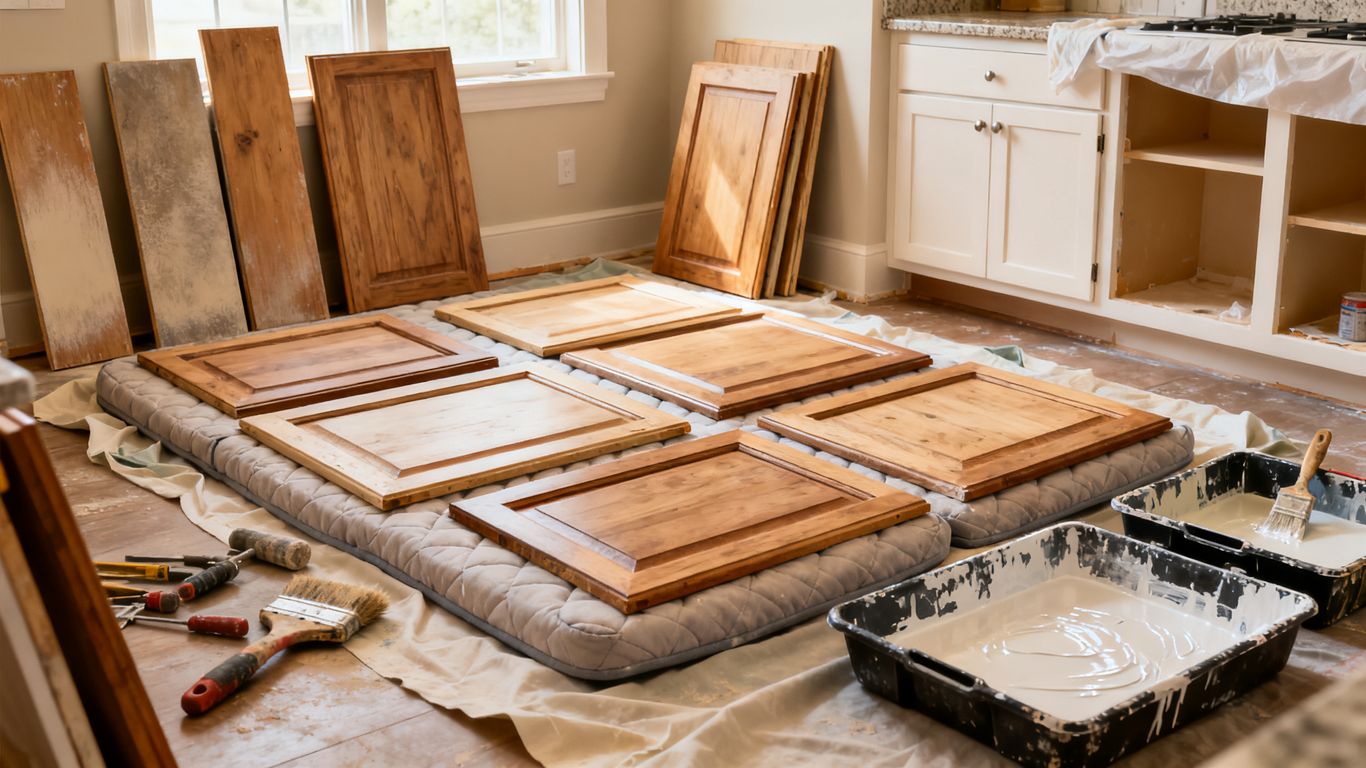
Wood, laminate, thermofoil, and previously painted surfaces do not all accept new coatings in the same way. The existing finish may be glossy, worn, peeling, stained, or contaminated with cooking residue. Each condition calls for a different preparation approach, and some surfaces need a bonding primer or additional testing before the full project begins.
The estimate should identify what the painter sees and how that condition will be handled. If the substrate is swollen, delaminated, or badly damaged, painting may improve color but cannot restore the underlying structure.
Repairs, sanding, and surface preparation
Degreasing, sanding, filling dents, repairing chipped edges, and smoothing transitions take time. Skipping those steps can leave visible texture, weak adhesion, or telegraphed damage beneath the new finish. The number of preparation passes is especially important on cabinets near ranges, sinks, and frequently used drawers.
Before approving a quote, ask whether the price includes cleaning and surface preparation for doors, drawer fronts, boxes, and exposed panels. A kitchen remodeling budget guide can also help place cabinet work within the larger decisions around storage, countertops, and layout.
Paint type, primer, and number of coats
Paint and primer choices affect both cost and appearance. A contractor may recommend a cabinet-specific system suited to the existing surface, along with enough coats to achieve consistent coverage. Color changes from dark to light may require more coverage than a similar-color repaint, while profiles and edges can need extra attention.
Ask what products are proposed, how many coats are included, and how long the finish needs to cure before normal use. The goal is not simply the most expensive material; it is a system appropriate for the surface and the conditions.
Accessibility, hardware, and kitchen layout
Hardware removal, labeling, drilling, filling old holes, and reinstalling knobs or pulls can add labor. So can working around a fixed countertop, backsplash, appliances, or a kitchen that cannot be fully emptied. Homeowners changing their hardware should measure carefully and consider comfort, scale, and door style; cabinet hardware guidance covers those planning concerns.
A clear scope should say whether hinges, knobs, pulls, and drawer slides are removed and replaced. It should also distinguish painting hardware from replacing it, since those are separate decisions with separate costs.
Cabinet painting versus cabinet replacement
Painting and replacement solve different problems. Painting changes the finish while preserving the existing cabinet footprint, whereas replacement can change storage, construction, layout, and functionality. The right choice depends on what is wrong with the current kitchen, not just how dated the color feels. A careful comparison prevents homeowners from paying for a larger renovation than they actually need.
When repainting offers the better value
Repainting often makes sense when cabinet boxes are sturdy, doors operate properly, and the existing layout works. It can update a room’s color and appearance while avoiding demolition, disposal, and the longer coordination required for new cabinetry. It is also a useful option when the homeowner wants a visual change but does not need additional storage.
The savings are not automatic, however. A high-detail kitchen with extensive repairs may narrow the gap between painting and other renovation options. Compare complete scopes, including installation, hardware, countertops, and finishing work.
Situations that may require new cabinets
Replacement deserves serious consideration when boxes are structurally failing, water damage is widespread, shelves are poorly configured, or the layout creates daily problems. Severe swelling, broken joinery, and persistent functional issues cannot be solved with paint. New cabinetry may also be appropriate when a remodel requires relocated appliances or substantially different storage.
A painter can identify visible surface concerns, but a homeowner may need a cabinet professional or remodeler to assess structural and layout questions. Painting should not be presented as a substitute for repairs it cannot perform.
Comparing long-term durability and appearance
A well-prepared repaint can look clean and cohesive, but its durability depends on surface condition, product selection, application, curing, and everyday use. Replacement provides a new manufactured finish and construction, though new cabinets can also be damaged or poorly installed. In either case, water, heat, abrasion, and harsh cleaners affect service life.
Look beyond the first impression. Ask how the finish will be maintained, how touch-ups are handled, and whether doors and drawers will be aligned and reinstalled carefully. Appearance and durability are outcomes of process, not color alone.
How to evaluate both options within your budget
Start by separating needs from preferences. If the layout works and the boxes are sound, obtain a detailed painting estimate; if the kitchen is cramped or damaged, price a replacement scope that addresses those deficiencies. Include related costs such as hardware, temporary kitchen arrangements, countertops, flooring, and permits where applicable.
The least expensive initial number may not be the least expensive project overall. A realistic comparison shows what each option changes, what it leaves untouched, and how much disruption it creates.
What a professional cabinet painting service includes
A professional cabinet project is a sequence, not just a visit with a spray gun. Doors and hardware need to be tracked, surfaces need to be made ready, and the kitchen needs protection while work proceeds. The written scope should describe both the visible finish and the less visible handling behind it. That clarity helps homeowners know what they are paying for.
Removing and labeling doors and hardware
Doors, drawer fronts, knobs, pulls, and hinges are removed so each piece can be handled appropriately. Labeling is essential because even similar-looking doors may differ in hinge position, size, or alignment. Hardware should be bagged and organized, or replaced under a clearly stated allowance.
Ask who is responsible for removal and reinstallation. A careful process reduces confusion at the end of the job and makes it easier to identify missing or damaged parts before work begins.
Cleaning, sanding, and repairing cabinet surfaces
Surfaces are cleaned to remove grease, dust, wax, and residue before sanding and repairs begin. Chips, dents, open seams, and worn edges may need filling or smoothing. Cabinet boxes require special care because they stay in the kitchen and must be protected from surrounding work.
The preparation plan should cover the backs and edges of doors as well as visible frames and panels. If the homeowner wants new hardware locations, filling and drilling should appear as separate line items.
Spraying doors and finishing cabinet frames
Removable doors and drawer fronts can be finished separately from cabinet frames, allowing the painter to control access and reduce disruption in the kitchen. Frames may be sprayed, brushed, or rolled depending on the setup, product, and project conditions. The estimate should state the intended method rather than leaving “paint cabinets” open to interpretation.
Curing time also matters. A finish that feels dry may not yet be ready for normal handling, so reinstallation and everyday use should follow the painter’s instructions.
Protecting the kitchen and cleaning the work area
Floors, countertops, appliances, walls, and nearby surfaces should be protected before preparation and application begin. At the end, the crew should remove masking, collect materials, and leave the work area orderly. Frontjes Painting describes its approach as care, precision, respect for the space, and leaving the job site clean and ready to enjoy.
For projects that involve a broader reset, homeowners sometimes coordinate domestic and office cleaning services after construction or painting work. That is separate from cabinet painting, but planning cleanup in advance can make the transition back to the kitchen easier.
How an industrial spray shop can affect the result
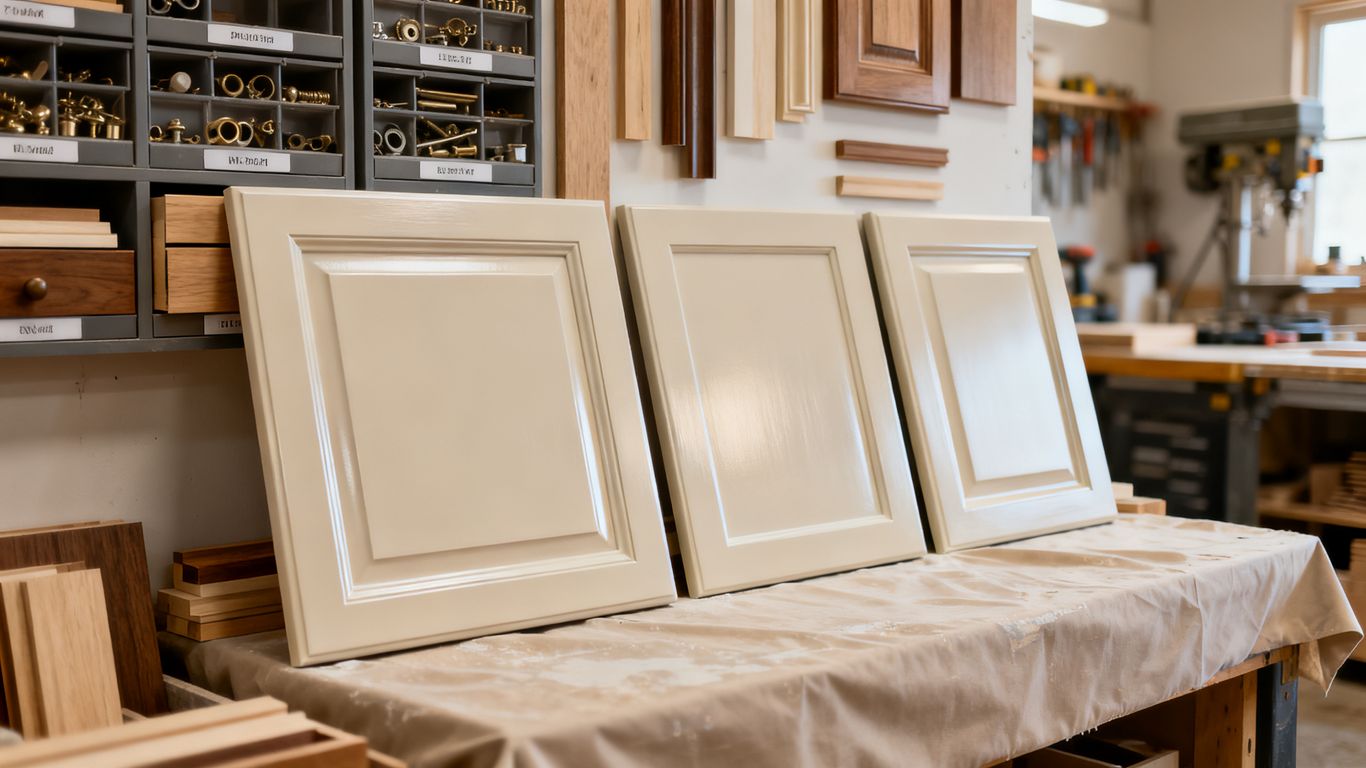
An industrial friendly spray shop can provide a dedicated setting for cabinets, pieces and parts, doors, and frames. Off-site or shop-based work is not automatically better for every project, but controlled conditions may help with handling and consistency. The best setup depends on which components can be removed and how the fixed cabinetry will be finished. Discuss the workflow before assuming a spray-shop price includes every part of the kitchen.
Why controlled spraying creates a smoother finish
Spraying can distribute finish evenly across broad faces and detailed profiles when the surface has been properly prepared. A dedicated area may reduce household interruptions and make it easier to control dust, ventilation, and handling. Still, smoothness depends on preparation, application technique, product, and curing—not on spraying alone.
Ask to see representative work and request a plain explanation of how the finish will be protected while it cures. Those details are more useful than a vague promise of a premium result.
Which cabinet parts can be painted off-site
Removable doors, drawer fronts, frames, and other pieces or parts may be candidates for shop work. Fixed cabinet boxes, installed fillers, and attached trim generally remain in the home unless they can be safely removed. The painter should identify what travels, how it is labeled, and how it returns.
Frontjes Painting has an industrial friendly spray shop — wait, this link is already used and wrong. Instead, Frontjes Painting’s documented service includes an industrial friendly spray shop for cabinets, pieces and parts, doors, and frames. This is a useful option to discuss when a project contains many removable components.
How spray-shop work may influence project pricing
Shop work can add transport, packing, setup, and handling, while on-site work may require more masking and dust control. Neither approach should be judged by the method name alone. Compare what is included, where preparation occurs, how pieces are protected, and whether reinstallation is part of the price.
A detailed estimate may show separate shop and on-site labor. That breakdown can make a higher quote easier to understand if it reflects additional handling and controlled finishing conditions.
Questions to ask about ventilation, curing, and handling
Before approving shop-based work, ask how the area is ventilated, how long parts cure, and what protects them during transport. Confirm whether doors are stacked, hung, or supported in a way that avoids contact damage. Also ask how the crew will handle touch-ups discovered during installation.
A short process video can help homeowners recognize the difference between preparation, application, and curing, but it should supplement—not replace—a written project scope.
How to compare cabinet painting estimates in Grand Rapids
Estimates are easiest to compare when each contractor is pricing the same work. A low total may reflect fewer coats, less masking, limited repairs, or no work on cabinet boxes. A higher total may include more preparation and a different finish method. Read the details before deciding which number fits your home.
What should be included in a written quote
Look for the cabinet areas included, removal and labeling responsibilities, hardware handling, repairs, preparation, primer, finish coats, application method, reinstallation, protection, cleanup, and payment schedule. The quote should also state what is excluded. If color changes, new hardware, or damaged surfaces may alter the price, those conditions should be explained.
A written scope protects both sides from assumptions. It also makes follow-up questions specific instead of leaving the homeowner to compare vague promises.
Comparing preparation methods instead of price alone
Ask how the contractor will clean, sand, repair, prime, and test the existing finish. Compare the answer line by line, especially around grease-prone areas and worn edges. The budget roofing estimate guide makes a similar general point in another trade: a low bid can omit components that protect the long-term result. The same caution applies here without assuming every low quote is inadequate.
Preparation is not glamorous, but it is where much of the finish’s future performance is determined. The best estimate makes that work visible.
Checking materials, warranties, and project timelines
The quote should identify the proposed coating system or at least explain why it suits the cabinet surface. Ask what the warranty covers, how exclusions work, and whether normal wear or water damage is included. Confirm the expected removal, painting, curing, and reinstallation timeline before clearing the kitchen.
A schedule should allow for drying and curing rather than treating every day as active painting time. If the kitchen is central to household routines, plan meals and temporary storage around those stages.
Evaluating local experience and customer reviews
Local experience matters because homes differ in age, access, materials, and finish history. Look for reviews that discuss communication, preparation, attention to detail, and cleanup—not only the final color. Frontjes Painting has served West Michigan since 1999 and works across residential and commercial painting projects, including cabinet refinishing and spray-shop work.
Reviews are individual experiences, not guarantees. Use them alongside references, project photos, a written scope, and a conversation about how the crew will treat your home.
Ways to manage your cabinet painting budget
Budget control starts before the first door is removed. Decide which changes matter most, identify work that can wait, and ask for alternatives without asking the painter to remove essential preparation. A thoughtful scope can reduce cost while protecting the parts of the project that determine the finish. This is where practical choices usually matter more than chasing the lowest advertised number.
Choosing which cabinets and components to repaint
You may be able to phase the project by repainting the most visible areas first, such as doors, drawer fronts, island panels, and exposed ends. That approach should be discussed carefully because mismatched aging or color can become noticeable later. Ask for pricing on the full scope and the proposed phased scope so the tradeoff is clear.
Do not assume that skipping cabinet boxes is always a savings worth taking. Their condition, visibility, and existing color will determine whether partial work looks intentional.
Deciding whether to replace hardware or keep it
Keeping usable hardware avoids replacement costs, but old knobs and pulls can make freshly painted cabinets feel unfinished. New hardware adds the cost of the pieces, measurements, possible hole filling, and new drilling. If you change placement, make sure the estimate includes both the repair and installation work.
Simple, comfortable hardware can improve daily use without requiring a complete kitchen renovation. Measure twice and choose a finish that works with the room’s other fixtures.
Preparing the kitchen before the painters arrive
Homeowners can often reduce delays by emptying cabinets, clearing countertops, arranging pet access, and identifying fragile items before the crew arrives. Confirm which appliances can remain in place and whether the kitchen will be usable during each stage. A short preparation list helps the crew begin efficiently:
- Remove food, dishes, and countertop appliances from work areas.
- Set aside hardware or label pieces if the agreed process requires homeowner participation.
- Create a clear path from the kitchen to the staging or loading area.
- Make decisions about color, hardware, and repairs before the scheduled start.
These steps do not replace professional preparation, but they reduce interruptions and prevent avoidable rescheduling. Ask the painter for a project-specific checklist rather than guessing what should be moved.
Avoiding low bids that leave out essential preparation
A quote that excludes degreasing, sanding, repairs, primer, protection, or reinstallation may look attractive until those tasks become change orders—or disappear from the scope. The low-bid renovation warning is a useful reminder to compare what is included, not just the headline price. Ask directly whether the contractor has allowed time for the existing finish and the condition of every cabinet component.
Frontjes Painting emphasizes clear communication, quality materials, attention to detail, and clean job sites. Those service qualities should be reflected in the conversation and written estimate, not merely mentioned in marketing.
Conclusion
The right cabinet painting budget in Grand Rapids depends on cabinet condition, preparation, component count, application method, and the level of care included in the estimate. Repainting can be a sensible alternative to replacement when the existing cabinetry is structurally sound, but the strongest results come from comparing complete scopes rather than chasing a low number. Get the work, materials, timing, cleanup, and responsibilities in writing before you schedule the project.
Frequently Asked Questions
How much does cabinet painting cost in Grand Rapids?
A small kitchen may be around $2,000 to $4,000, an average kitchen around $4,000 to $7,000, and a larger or more involved project above that range. Cabinet condition, layout, preparation, and finish method can change the final price.
Is cabinet painting cheaper than cabinet replacement?
It is often less expensive when the cabinet boxes and layout are still suitable. The comparison should include hardware, repairs, countertops, installation, demolition, and any temporary kitchen costs rather than comparing paint labor with cabinet purchase alone.
What makes cabinet painting more expensive?
Large kitchens, many doors and drawers, extensive trim, damaged surfaces, difficult access, major color changes, new hardware placement, and additional preparation can all increase labor and materials.
Should cabinet doors be removed for painting?
Removing doors and drawer fronts generally makes preparation and application more controlled. Proper labeling and careful reinstallation are essential so each component returns to its original position and alignment.
How long does a cabinet painting project take?
Timing varies with kitchen size, repairs, coating requirements, shop or on-site workflow, and curing time. A written schedule should distinguish active work from drying and curing periods.
Can damaged cabinets be painted?
Minor dents, chips, and worn edges may be repairable before painting. Water damage, swollen materials, failing joinery, or widespread delamination may require replacement or specialized cabinet repairs instead.
What should I ask before accepting an estimate?
Ask what surfaces are included, how they will be cleaned and prepared, which primer and finish are planned, how hardware is handled, what protection and cleanup are provided, how long the work will take, and what the warranty covers.